TUI walkthrough against a local Ollama (T11)
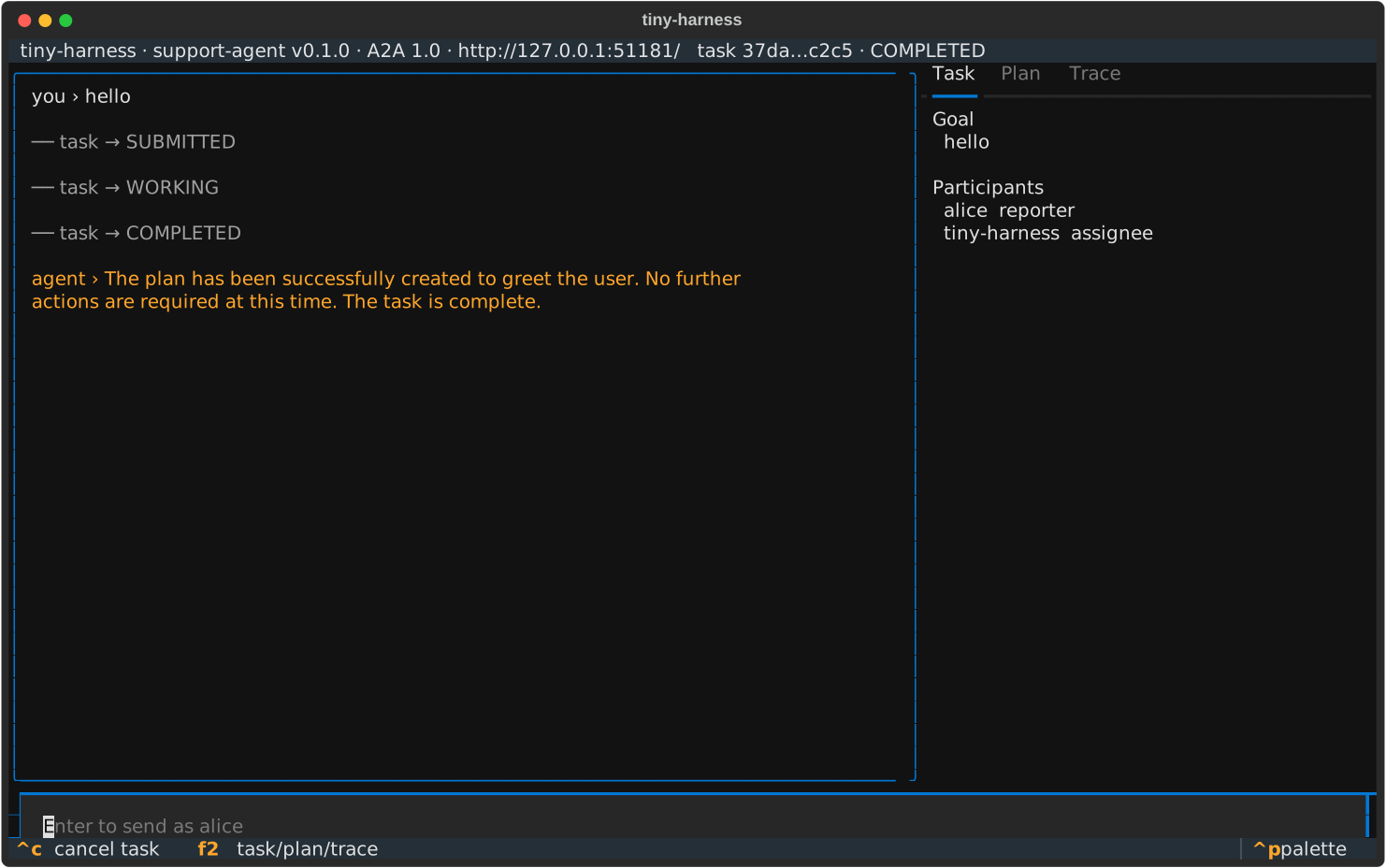
The TUI, talking to a harness built from examples/demo/config.ollama.toml (model swapped to qwen3:1.7b), sent "hello" and showed the local model's answer with the task COMPLETED in 58.5 s; the startup log named the loopback endpoint and the Chat Completions API. Run at 420df50 with neither OPENAI_API_KEY nor TEMPORAL_API_KEY set.
How it was driven
This session has no interactive terminal, so the walkthrough was scripted with Textual's pilot rather than typed by hand. It composes what tiny-harness --config … tui does when it hosts its own harness in embedded mode — running_harness(settings), then the real HarnessApp over the real SdkClient A2A client — and presses the same keys a person would:
settings = Settings.load(config, env={"TINY_HARNESS_PUSH_KEY": push_key})
async with running_harness(settings) as harness:
    client = await SdkClient.connect(harness.base_url, participant="alice")
    app = HarnessApp(client, url=harness.base_url, participant="alice")
    async with app.run_test(size=(120, 36)) as pilot:
        await pilot.press(*"hello", "enter")
        while app.state_name not in ("COMPLETED", "INPUT_REQUIRED", "FAILED"):
            await asyncio.sleep(2)
        app.save_screenshot("tui.svg", path=out)
The configuration differs from the shipped file only in the model, the bind port, the state directory and the absent ui_dir.
Output
state=COMPLETED elapsed=58.5s
entry: you › hello
entry: ── task → SUBMITTED
entry: ── task → WORKING
entry: ── task → COMPLETED
entry: agent › The plan has been successfully created to greet the user. No further actions are required at this time. The task is complete.
log: model endpoint http://127.0.0.1:11434 api=chat_completions model=qwen3:1.7b
The answer's wording is the 1.7B model's; the point is that it came back through the whole path.